
Table of Contents
- 1 Why pure-strategy games struggle to sustain audiences
- 2 How chance functions as an audience equalizer
- 3 How TCGs found the sweet spot
- 4 How casual gaming applies the same balance differently
- 5 Why the wrong balance is so noticeable
- 6 What testing reveals about player satisfaction
- 7 How the balance changes across formats
- 8 What makes well-balanced games keep working
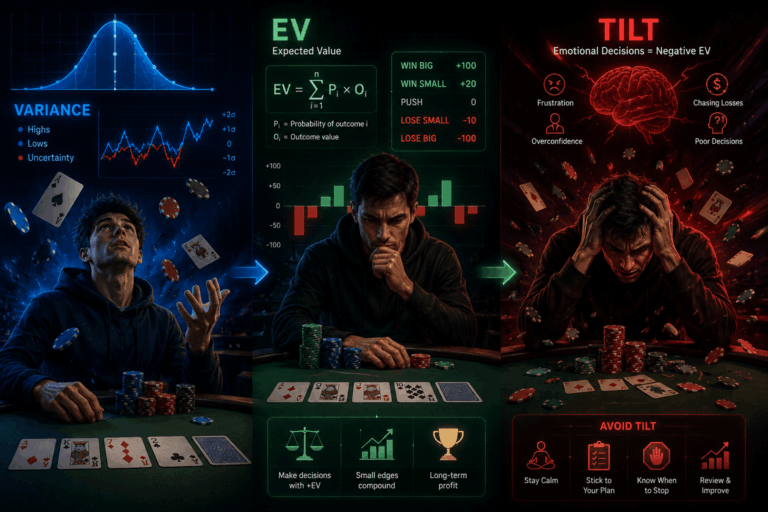
The mix of strategy and chance is what separates games people return to for years from games people abandon after a single session. Too much strategy and the game becomes a chess match where the better player wins every time and the weaker player never sees a reason to keep playing. Too much chance and the game becomes a coin flip where strategic decisions feel meaningless. The narrow band between those extremes is where the games that build lasting communities tend to sit, and the design discipline required to find that band is significantly harder than it looks from the outside.
Why pure-strategy games struggle to sustain audiences
Chess is the obvious example of a pure-strategy game, and its longevity is real but limited to a narrow audience. Outside of chess specifically, pure-strategy games tend to struggle to maintain casual audiences because the gap between newer and experienced players is too wide to bridge. A new player who loses fifteen straight matches will stop playing regardless of how elegant the underlying system is. The strategic depth that the experienced players value becomes a barrier rather than a draw. The games that find broader audiences almost always introduce some element of chance to compress that skill gap.
How chance functions as an audience equalizer
Chance is not just a design flourish. It is a structural tool that allows players of different skill levels to compete in a way that produces interesting matches across the skill spectrum. A 70/30 win rate for the better player in a strategy-plus-chance game is far more sustainable than the 95/5 split a pure-strategy game would produce. The 70/30 ratio gives the weaker player enough wins to stay invested while still rewarding the stronger player most of the time. The math sounds cynical, but it is what allows a TCG or strategy game to maintain a player base that includes both casual and competitive participants.
How TCGs found the sweet spot
Collectible card games like Riftbound have spent decades refining the strategy-chance balance. Card draw introduces variance into the opening hand, which prevents the better deck from automatically winning every match. Deck construction is the strategic layer that determines how well the player can capitalize on the cards they draw. The mulligan rule softens the worst variance outcomes. Each of these structural elements exists specifically to find the balance point where strategy still matters but chance keeps the matches dynamic, and the steady stream of strategy articles and meta analysis reflects how much craft sits behind every published deck list.
How casual gaming applies the same balance differently
PlayFame, a social gaming platform built around accessible session-based titles, has applied the strategy-chance balance further toward the chance end of the spectrum while still preserving strategic elements that reward player decisions. The sweepstake slots experiences on the platform mix variance-driven outcomes with choices about session pacing, feature selection and bonus management. The balance point is different from a TCG but the underlying design problem is the same: keep matches interesting across a wide range of player skills without making either pure luck or pure skill the dominant factor.
Why the wrong balance is so noticeable
Players sense the strategy-chance balance immediately even when they cannot articulate it. A game that tilts too far toward chance produces a feeling of futility, where the player's choices feel meaningless because the outcome is already decided by the deck or the dice. A game that tilts too far toward strategy produces a feeling of inevitability, where the player knows from move five how the match will end. Both feelings drive players away. The games that build lasting audiences keep both feelings at bay simultaneously, which is harder than either extreme, and a long history of discussion about strategy-chance balance backs up the same finding across countless tabletop designs.
What testing reveals about player satisfaction
Game design teams that run extensive playtesting consistently find that the balance point is narrower than initial designs assume. A game that feels balanced to the designers often feels too strategic to casual players and too random to competitive ones. Finding the version that works for both groups usually requires multiple iterations and a willingness to accept that the final balance will be different from the original vision. The teams that resist this iteration often end up with games that excel for one audience and fail for the other, and recent GamesIndustry.biz reporting on player retention consistently arrives at the same conclusion about the cost of skipping iteration.
How the balance changes across formats
The right strategy-chance balance is not the same for every game. A draft format leans more strategic because deck construction itself becomes part of the variance. A constructed format leans more chance-driven because the strategic work happens before the match starts. A bo3 format tolerates more variance per game because the format averages out the rolls. Each format calls for slightly different tuning, and the design teams that recognize this tend to build games that work across competitive levels rather than only at one.
What makes well-balanced games keep working
Games that find the strategy-chance balance early tend to maintain audiences for years or decades. The players keep coming back because every session feels meaningful and every session has stakes. The casual players have wins to celebrate. The competitive players have skill to demonstrate. The community stays cross-sectional rather than splitting into casual and hardcore camps that lose touch with each other. The games that miss the balance either fade into purely competitive niches or burn out as casual fads. The balance is what makes the difference, and the design teams that internalize this tend to build the genre's most durable titles.