

Table of Contents
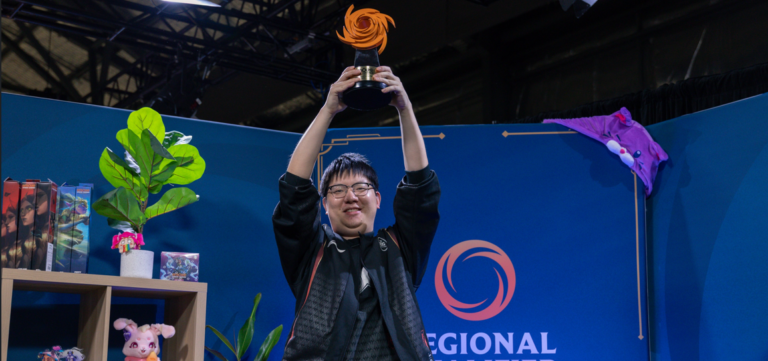
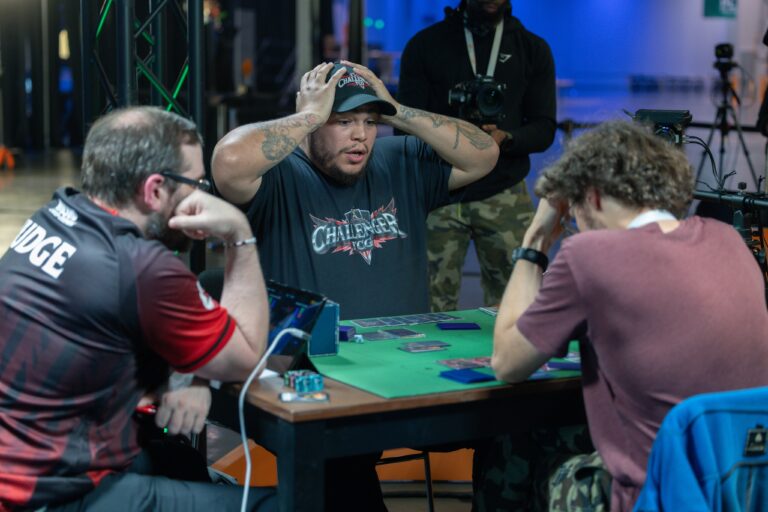
New Zealand isn't exactly the easiest place to get to for a card game tournament. Yet, Geek Culture events managed to gather 340 players to hold the largest TCG event in New Zealand's history. Obviously, this cannot be compared to a regional tournament, but 340 players might be the largest event we'll get before the Regional Qualifier in Lille kicks off.
Plus, the interesting narrative isn't how cool it must be to go play a tournament on a beautiful island. Rather, we are still stuck with the same question: Why did Draven dominate once again?
Day 2 required a 6-2 or better record over the 8 swiss rounds held during Day 1. At the end of it, 50 players were still alive, with Draven the most represented legend of that bunch:
- Draven - 12
- Viktor - 8
- Irelia - 7
- Kai'Sa - 4
- Master Yi - 4
- Fiora - 4
- Sett - 3
- Azir - 3
- Ahri - 2
- Lucian - 1
- Rek'Sai - 1
- Miss Fortune - 1
Some might frown at the idea Draven is still sitting atop the competition when it comes to Day 2 representation. However, this is much healthier than what we had prior to the ban list. 12 out of 50 is 24% of the field, much lower than the 42.2% in Shenzen or the 37% in Vegas prior to the ban list.
The conversion rate is a bit more worrisome though, as Draven had a 40% score, meaning only 12 Dravens on day 2 might be the result of fewer players picking that legend, rather than the Glorious Executioner actually getting worse.
Unfortunately, it gets a little worse once we look at the top 8 distribution:
- Draven - 6
- Viktor - 1
- Lucian - 1
The sole Lucian managed to reach the finals, meaning it wasn't a Draven solitary run once in the final stages of the tournament. Still, it is only natural a few might look at the results and wonder if the ban list had the expect impact on the Riftbound metagame.
In my opinion; it did. However, it will take a bit longer for those changes to materialize. Here's why:
Midrange Draven still packs a ton of great cards
The ban list targeted specifically the Miracle decks, meaning that one and Detonate Draven took the bigger hit. Midrange Draven lost a few cards as well, with SFD-020 hurting its ability to curve every game, while OGN-168 does not allow to hold for free at times.
However, that deck still has access to a flurry of fantastic midrange units, able to pressure (OGN-027), daw (OGN-039), anchor the board ( SFD-021) or disrupt the opponent (OGN-026) alongside multiple very useful cheap ones.
The same could be said for spells, with SFD-145 or OGN-172 still available to handle opposing units, while OGN-173 helps pushing for the win.
In that archetype, battlefields might have been the trickiest part to figure out after the bans. Yet, the tournament winner made a very clever use of SFD-208. He was using it to support a conquer with SFD-186, then transfer the gear to a unit back in base, keeping the axe safer from possible removal.
Learning a new legend isn't that simple
The tournament happened just 4 days after the bans were announced. Not only this is a very short time to choose and learn the intricacies of a new legend, it might be impossible to find the card in time for the event.
Almost immediately after the ban list was revealed, SFD-196 and OGS-011 skyrocketed in price, with many expecting Irelia to be the dominant legend from now on. Someone who already spent a couple hundred bucks to build Draven might think twice before doing it a second time in order to grab Irelia's key cards. Add the doubt to not receive them in time, as New Zealand isn't exactly the easiest place to deliver a package, and the decision to adapt your Draven decks suddenly makes a lot more sense.
Plus, Midrange Draven is a deck aimed at imposing its play-style, rather than consider a lot of outside parameters in order to thrive. Thus, it is most likely only those on Miracle or Detonate Draven made the switch, the ban list targeting them in particular. The experienced pilots for Midrange Draven had no reason to change their deck so close to a tournament.
Midrange Draven is a proactive archetype
No matter the TCG, there are decks designed to enforce their strategy, called proactive, and others aimed at disrupting their opponent rather than achieving their own agenda, called reactive. Typically, proactive decks always lead the charge in a new environment, as they have fewer factors to consider when designing their deck. Indeed, because the core of their strategy is to push their own synergy, these decks will rely on generically strong cards at first, or build around a gimmick they can support efficiently. Once in a match, a proactive deck will look to grab initiative, and follow a plan that will not deviate much based on its opponent.
Reactive decks on the other hand, typically have to wait for the proactive ones to come out in order to adapt against those. Picking match-up specific cards or designing the side-deck in particular, requires a lot of information and fine tuning.
Midrange Draven being a proactive deck, it can be built without a ton of information about the other legends. Thus, the metagame possibly being different didn't impact the strategy that much, leading to a deck immediately playing close to full strength. Among the reactive decks however, all those who thought they could plan for a tournament without many Dravens probably didn't pack the appropriate removal.
As a result, it is possible the power Draven lost in the ban list was mitigated by a metagame which stopped actively trying to counter it. A slightly weaker deck in a slightly better environment logically leads to similar results.
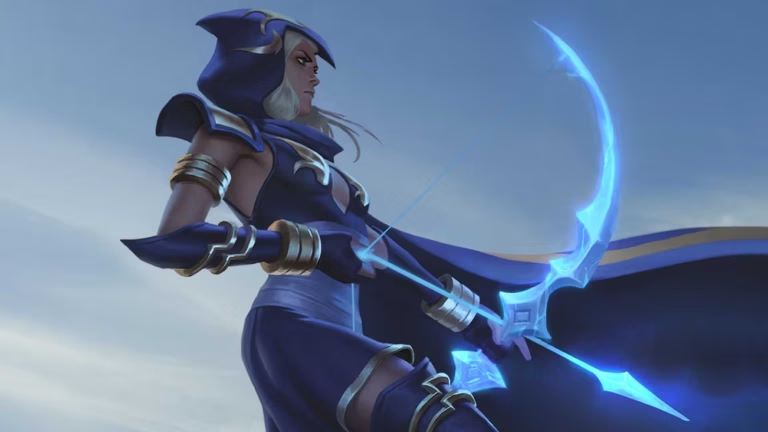
If we look at the other two legends in the Top 8, Lucian and Viktor are also proactive legends, at least in how they are built. Indeed, Lucian is forced to pack a good amount of gears, which naturally gives the deck a route to follow. Viktor is more control oriented, but doesn't pack very match-up specific cards, instead prefering to use the strongest cards available in the Mind and Order domains while its ability takes care of summoning units.
Closing Words
This early after the ban list, and in a country with little card game reputation, it is tempting to just say this tournament has many reason not to be what the upcoming Regional Qualifiers will look like.
However, Midrange Draven was clearly going to survive the ban list, while the bare minimum should be to see not impacted legends progress. Plus, it is important to note Draven took most popular on Day 2, six spots in Top 6 and the tournament win while not being the most popular legend this time.
In that context, it is safe to assume Draven has some gas left in him, even if the legend is now limited to one archetype only. In future tournaments, I expect the competition to be much fiercer, especially as the likes of Ezreal seem to only perform during Regional Tournament. Still, I wouldn't rule Draven out of the potential winners discussion.